Introduction
Diabetes has become one of the most common health conditions affecting people across the globe. According to health experts, millions of individuals are living with diabetes, and many more remain undiagnosed. While most people have heard of diabetes, there is often confusion about the differences between the two primary forms of the disease. Understanding Type 1 vs Type 2 Diabetes is essential for recognizing symptoms, managing health risks, and seeking the right treatment.
Although both conditions cause elevated blood sugar levels, they develop for different reasons and require different approaches to treatment. In this detailed guide, we’ll explore everything you need to know about insulin-related disorders, including causes, symptoms, diagnosis, treatment, prevention, and lifestyle management.
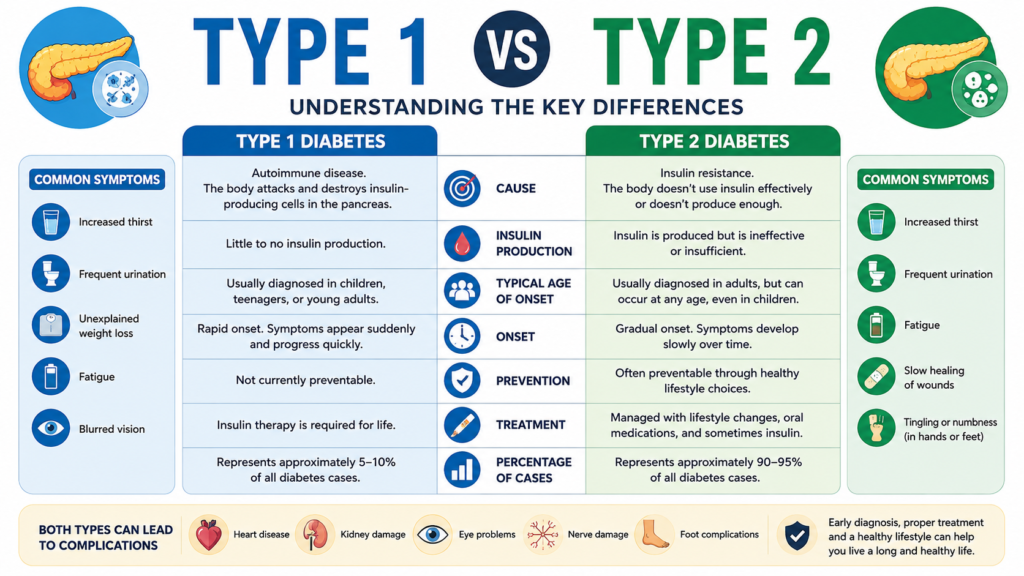
Understanding Diabetes
Before comparing the two main types of diabetes, it’s important to understand how diabetes affects the body.
When you eat food, your digestive system breaks carbohydrates into glucose, which enters the bloodstream. The pancreas produces insulin, a hormone that helps glucose move from the blood into the cells, where it is used for energy.
Diabetes occurs when:
- The body does not produce enough insulin.
- The body cannot use insulin effectively.
- Both problems occur simultaneously.
As a result, glucose builds up in the bloodstream, leading to high blood sugar levels that can damage organs and tissues over time.
What Is Type 1 Diabetes?
Type 1 Diabetes is an autoimmune disease. In people with this condition, the immune system mistakenly attacks and destroys insulin-producing cells in the pancreas.
Because the body can no longer make enough insulin, individuals with the autoimmune form of diabetes need insulin replacement therapy for life.
Key Features of Type 1 Diabetes
- Usually develops in children, teenagers, or young adults
- Can occur at any age
- Not caused by lifestyle choices
- Requires daily insulin administration
- Symptoms often appear suddenly
Researchers believe genetic and environmental factors contribute to the development of Type 1 Diabetes, although the exact cause remains unknown.
What Is Type 2 Diabetes?
This form of diabetes develops when the body’s cells become resistant to insulin or when the pancreas cannot produce sufficient insulin to maintain normal blood sugar levels.
Unlike these two forms of diabetes is often associated with lifestyle and metabolic factors.
Key Features of Type 2 Diabetes
- Most common form of diabetes
- Often develops gradually
- Frequently linked to obesity
- Can sometimes be delayed or prevented
- Managed through lifestyle changes, medication, and occasionally insulin
Today, Type 2 Diabetes affects people of all ages, including children and adolescents.
Autoimmune diabetes and insulin resistance: A Detailed Comparison
When comparing Type 1 vs Type 2 Diabetes, several important differences stand out.
| Feature | Type 1 Diabetes | Type 2 Diabetes |
| Disease Progression | Symptoms often emerge within a short period and can worsen quickly | Symptoms usually develop slowly and may remain unnoticed for years |
| Prevention Potential | There is currently no known method to prevent its occurrence | Healthy lifestyle habits may significantly reduce the risk of developing it |
| Management Approach | Requires lifelong insulin replacement to regulate blood sugar levels | Often managed through nutrition, exercise, medications, and insulin when necessary |
| Global Prevalence | Represents a relatively small portion of diabetes diagnoses worldwide | Makes up the vast majority of diabetes cases across the globe |
Understanding these distinctions can help patients receive proper care and treatment.
Symptoms of Type 1 Diabetes
Symptoms of Type 1 Diabetes usually appear quickly and can become severe within weeks.
Common Symptoms
- Excessive thirst
- Frequent urination
- Increased hunger
- Sudden weight loss
- Fatigue
- Blurred vision
- Irritability
- Dry skin
Without treatment, Type 1 Diabetes can lead to diabetic ketoacidosis, a serious medical emergency.
Symptoms of Type 2 Diabetes
Type 2 Diabetes often develops slowly, and symptoms may remain unnoticed for years.
Common Symptoms
- Constant thirst
- Frequent urination
- Increased hunger
- Persistent tiredness
- Blurred vision
- Slow wound healing
- Recurring infections
- Tingling or numbness in hands and feet
Regular health screenings can help identify Type 2 Diabetes before complications occur.
What Causes Type 1 Diabetes?
Although researchers continue to study the disease, several factors appear to play a role.
Autoimmune Activity
The immune system mistakenly destroys insulin-producing cells.
Genetics
Certain inherited genes increase susceptibility.
Environmental Triggers
Possible triggers include:
- Viral infections
- Environmental exposures
- Immune system abnormalities
Importantly, diet and lifestyle do not cause Type 1 Diabetes.
What Causes Type 2 Diabetes?
Several factors increase the likelihood of developing Type 2 Diabetes.
Excess Weight
Extra body fat contributes to insulin resistance.
Physical Inactivity
A sedentary lifestyle affects glucose metabolism.
Family History
Having close relatives with diabetes increases risk.
Unhealthy Eating Habits
Frequent consumption of processed foods may contribute to blood sugar problems.
Age and Hormonal Changes
Risk generally rises with age, although younger people are increasingly affected.
Diagnosing Diabetes
Healthcare providers use specific tests to diagnose diabetes accurately.
Fasting Plasma Glucose Test
Measures blood sugar after fasting.
HbA1c Test
Provides an average blood sugar reading over the previous two to three months.
Oral Glucose Tolerance Test
Evaluates the body’s response to glucose.
Random Blood Sugar Test
Measures glucose levels regardless of meal timing.
Early diagnosis improves treatment outcomes and helps prevent complications.
Treatment Options for Type 1 Diabetes
Managing Type 1 Diabetes requires continuous attention.
Insulin Therapy
Insulin replacement is essential for survival.
Blood Sugar Monitoring
Regular testing helps maintain healthy glucose levels.
Balanced Nutrition
Healthy eating supports blood sugar control.
Exercise
Physical activity improves overall well-being.
Technology-Based Management
Many patients use insulin pumps and continuous glucose monitoring devices.
Treatment Options for Type 2 Diabetes
Treatment depends on the severity of the condition and individual health needs.
Lifestyle Improvements
Many people benefit from:
- Weight management
- Healthy eating
- Increased physical activity
- Better sleep habits
Oral Medications
Doctors may prescribe medications to improve insulin effectiveness.
Injectable Therapies
Some patients require injectable medications or insulin.
Consistent treatment helps reduce the risk of complications.
Can Type 2 Diabetes Be Prevented?
One of the biggest differences in the discussion of both diabetes types is prevention.
While Type 1 Diabetes cannot currently be prevented, many cases of Type 2 Diabetes can be delayed or avoided.
Prevention Strategies
- Maintain a healthy body weight
- Exercise regularly
- Eat nutrient-rich foods
- Limit sugary beverages
- Avoid smoking
- Manage stress effectively
- Schedule regular health checkups
Healthy daily habits play a major role in reducing risk.
Potential Complications of Diabetes
Poorly managed diabetes can affect multiple organs and body systems.
Heart Disease
High blood sugar increases cardiovascular risks.
Kidney Disease
Diabetes is a leading cause of kidney damage.
Vision Problems
Long-term high blood sugar can affect eye health.
Nerve Damage
Nerves may become damaged due to prolonged glucose exposure.
Foot Complications
Reduced circulation can lead to infections and healing problems.
Proper management significantly lowers these risks.
Living Successfully With Diabetes
Millions of people successfully manage diabetes and enjoy active, productive lives.
Daily Management Tips
- Follow your treatment plan
- Monitor blood sugar consistently
- Stay physically active
- Eat balanced meals
- Stay hydrated
- Attend regular medical appointments
Knowledge, discipline, and professional guidance are key to long-term success.
Conclusion
The comparison of diabetes comparison reveals important differences in causes, symptoms, treatment, and prevention. Type 1 Diabetes is an autoimmune condition that requires lifelong insulin therapy, while Type 2 Diabetes is primarily linked to insulin resistance and can often be managed through healthy lifestyle changes.
Recognizing symptoms early, obtaining an accurate diagnosis, and following a personalized treatment plan can dramatically improve quality of life. Whether you are managing diabetes yourself or supporting someone who is, understanding the two conditions is the first step toward better health and informed decision-making.
Need More Traffic for Your Healthcare Website?
Want to rank higher on Google, generate qualified leads, and grow your healthcare business online?
Visit: www.health.bhagatsinghdigital.com
Call Now: +91-8905335392
At Bhagat Singh Digital, we provide expert SEO services, healthcare content writing, website optimization, local SEO, and digital marketing strategies designed to help your business attract more visitors and convert them into customers.
Frequently Asked Questions (FAQs)
1. What is the primary difference between diabetes classification?
Type 1 Diabetes occurs when the body stops producing insulin, while Type 2 Diabetes develops when the body cannot use insulin efficiently.
2. Which type of diabetes is more common?
Type 2 Diabetes accounts for the vast majority of diabetes cases worldwide.
3. Can Type 1 Diabetes be prevented?
Currently, there is no proven way to prevent Type 1 Diabetes.
4. Can Type 2 Diabetes be reversed?
Some individuals achieve remission through significant weight loss and lifestyle improvements.
5. Does every diabetic patient need insulin?
All Type 1 Diabetes patients require insulin, while some Type 2 Diabetes patients may not.
6. Is diabetes inherited?
Genetics can increase the risk of both the condition.
7. What foods should diabetics focus on?
Whole grains, vegetables, fruits, lean proteins, and healthy fats are generally recommended.
8. How important is exercise for diabetes management?
Exercise improves insulin sensitivity and supports healthy blood sugar levels.
9. What happens if diabetes is left untreated?
Untreated diabetes can lead to heart disease, kidney damage, nerve problems, and vision loss.
10. Why should people learn about diabetes disorders?
Understanding the differences helps individuals recognize symptoms, seek treatment promptly, and manage their health more effectively.