Introduction
Understanding Type 1 Diabetes vs Type 2 Diabetes is essential because both conditions affect blood sugar differently and require different treatment approaches. Knowing these differences can help with early diagnosis and better disease management.
Diabetes has become one of the most widespread health conditions across the globe, impacting millions of people every year. Despite growing awareness, many individuals still find it difficult to distinguish between Type 1 Diabetes and Type 2 Diabetes. While both conditions affect blood glucose levels, they differ significantly in their causes, progression, treatment methods, and long-term management.
Understanding Type 1 Diabetes vs Type 2 Diabetes is essential because early recognition can help prevent complications and improve overall health outcomes. Whether you have recently been diagnosed, are supporting a family member, or simply want to learn more about diabetes, this guide will provide clear and practical information.
Let’s explore the major differences between these two forms of diabetes and understand how they affect the body.
What Is Diabetes?
Diabetes is a metabolic disorder that occurs when the body struggles to regulate blood sugar levels effectively.
The food we eat is converted into glucose, which serves as fuel for our cells. To use this glucose properly, the body relies on insulin—a hormone produced by the pancreas. Insulin helps glucose move from the bloodstream into the cells where it can be used for energy.
When insulin production is disrupted or the body cannot use insulin efficiently, glucose accumulates in the bloodstream, leading to diabetes.
The most common forms include:
- Type 1 Diabetes
- Type 2 Diabetes
Although both conditions result in high blood sugar levels, they develop for very different reasons.
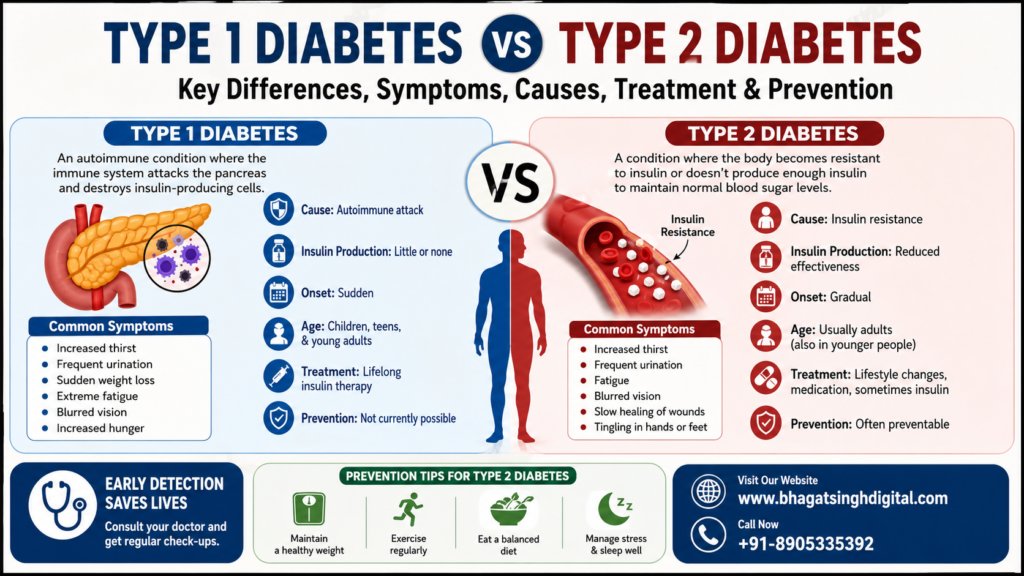
The following Type 1 Diabetes vs Type 2 Diabetes comparison table highlights the major differences between these two conditions, including their causes, symptoms, treatment, and prevention.
Type 1 Diabetes vs Type 2 Diabetes: Quick Comparison
| Comparison Factor | Type 1 Diabetes | Type 2 Diabetes |
| Underlying Cause | Autoimmune destruction of insulin-producing cells | Insulin resistance and reduced insulin function |
| Insulin Production | Very little or none | Present but often ineffective |
| Typical Onset | Childhood, adolescence, or early adulthood | Usually adulthood, but increasingly common in younger people |
| Development Speed | Rapid | Gradual |
| Prevention | Currently unavailable | Often preventable |
| Body Weight | Usually normal | Frequently overweight or obese |
| Primary Treatment | Insulin therapy | Lifestyle changes, medication, and sometimes insulin |
| Global Cases | Around 5-10% | Around 90-95% |
What Is Type 1 Diabetes?
When comparing Type 1 Diabetes vs Type 2 Diabetes, the biggest difference is that Type 1 Diabetes is an autoimmune disease, while Type 2 Diabetes develops mainly because of insulin resistance.
Type 1 Diabetes is an autoimmune condition in which the immune system mistakenly attacks the insulin-producing beta cells located in the pancreas.
As these cells become damaged or destroyed, insulin production decreases dramatically. Without adequate insulin, glucose remains trapped in the bloodstream rather than entering cells for energy.
People with Type 1 Diabetes require insulin therapy throughout their lives to survive and maintain healthy blood sugar levels.
Common Symptoms of Type 1 Diabetes
The symptoms often appear suddenly and can worsen quickly.
Signs may include:
- Intense thirst
- Frequent urination
- Sudden and unexplained weight loss
- Constant hunger
- Severe tiredness
- Blurred vision
- Mood changes
- Difficulty focusing
- Dry skin
Because symptoms progress rapidly, prompt medical attention is important.
What Causes Type 1 Diabetes?
Researchers believe several factors contribute to the development of Type 1 Diabetes.
Genetic Susceptibility
Certain inherited genes may increase risk.
Immune System Malfunction
The body’s defense system mistakenly attacks healthy pancreatic cells.
Environmental Influences
Viral infections and environmental exposures may trigger the autoimmune response in genetically susceptible individuals.
While significant progress has been made in research, the exact cause remains unknown.
What Is Type 2 Diabetes?
Many people searching for Type 1 Diabetes vs Type 2 Diabetes want to know whether lifestyle plays a role. Unlike Type 1 Diabetes, Type 2 Diabetes is often linked to lifestyle and genetic factors.
Type 2 Diabetes develops when the body’s cells gradually lose their ability to respond properly to insulin.
This condition is known as insulin resistance.
Initially, the pancreas compensates by producing more insulin. Over time, however, the pancreas may struggle to keep pace with the body’s demands, resulting in elevated blood sugar levels.
Type 2 Diabetes is strongly associated with lifestyle and metabolic factors.
Common Symptoms of Type 2 Diabetes
Unlike Type 1 Diabetes, symptoms may develop slowly and remain unnoticed for years.
Common warning signs include:
- Excessive thirst
- Frequent urination
- Constant fatigue
- Increased hunger
- Blurred vision
- Slow-healing cuts and wounds
- Frequent infections
- Tingling or numbness in hands and feet
- Darkened skin around the neck or armpits
Many people discover they have Type 2 Diabetes during routine health screenings.
What Causes Type 2 Diabetes?
Several factors increase the likelihood of developing Type 2 Diabetes.
Excess Weight
Carrying extra body fat can make cells less responsive to insulin.
Physical Inactivity
A sedentary lifestyle reduces the body’s ability to regulate glucose effectively.
Poor Dietary Habits
Frequent consumption of sugary drinks and processed foods increases risk.
Family History
Having a close relative with Type 2 Diabetes raises the chances of developing the condition.
Age
Risk generally increases with age, although younger individuals are increasingly affected.
Stress and Sleep Problems
Long-term stress and inadequate sleep may contribute to insulin resistance.
Major Differences Between Type 1 Diabetes and Type 2 Diabetes
Understanding these distinctions can help individuals recognize symptoms and seek appropriate care.
1. Cause of the Condition
Type 1 Diabetes results from an autoimmune attack.
Type 2 Diabetes develops because the body becomes resistant to insulin or cannot use it effectively.
2. Insulin Production
People with Type 1 Diabetes produce little or no insulin.
People with Type 2 Diabetes usually continue producing insulin, but their cells do not respond properly.
3. Speed of Onset
Type 1 Diabetes often develops within weeks.
Type 2 Diabetes may develop gradually over many years.
4. Prevention Possibilities
There is currently no proven way to prevent Type 1 Diabetes.
Many cases of Type 2 Diabetes can be delayed or prevented through healthy lifestyle choices.
5. Treatment Requirements
Type 1 Diabetes always requires insulin therapy.
Type 2 Diabetes may initially be managed through lifestyle modifications and medications.
How Is Diabetes Diagnosed?
Doctors use several laboratory tests to diagnose diabetes accurately.
Fasting Blood Glucose Test
Measures blood sugar after fasting for at least eight hours.
HbA1c Test
Shows average blood glucose levels over the previous two to three months.
Oral Glucose Tolerance Test
Measures how efficiently the body processes sugar.
Random Blood Sugar Test
Evaluates blood glucose at any time of the day.
Early diagnosis is crucial for preventing complications.
Treatment for Type 1 Diabetes
Since insulin production is severely limited, insulin replacement is necessary.
Treatment typically includes:
- Daily insulin injections
- Insulin pump therapy
- Continuous glucose monitoring systems
- Blood sugar tracking
- Balanced nutrition
- Regular exercise
Effective management helps maintain healthy glucose levels and reduces health risks.
Treatment for Type 2 Diabetes
Treatment plans vary depending on disease progression and individual needs.
Lifestyle Changes
Many individuals successfully manage Type 2 Diabetes through:
- Weight loss
- Healthy eating habits
- Daily physical activity
- Stress management
- Improved sleep quality
Medications
Doctors may prescribe medications to improve insulin sensitivity and blood sugar control.
Insulin Therapy
Some individuals eventually require insulin if blood sugar remains difficult to manage.
Can Diabetes Be Prevented?
Preventing Type 1 Diabetes
Currently, there is no guaranteed prevention strategy.
Researchers continue investigating immune-based treatments and genetic factors.
Preventing Type 2 Diabetes
Many preventive measures are highly effective.
Maintain a Healthy Weight
Even modest weight loss can significantly lower risk.
Exercise Regularly
Physical activity improves insulin function.
Eat a Balanced Diet
Focus on:
- Fresh vegetables
- Fruits
- Whole grains
- Lean proteins
- Healthy fats
Limit Processed Foods
Reducing added sugars and refined carbohydrates supports better blood sugar control.
Schedule Regular Health Checkups
Routine screenings help detect risk factors early.
Possible Complications of Diabetes
Poorly controlled diabetes can affect multiple organs and systems.
Heart Disease
Diabetes increases the risk of heart attacks and strokes.
Kidney Problems
High blood sugar can damage kidney function over time.
Vision Loss
Diabetic eye disease can affect eyesight if left untreated.
Nerve Damage
Nerve-related complications may cause numbness, tingling, and pain.
Foot Issues
Poor circulation increases the likelihood of infections and ulcers.
Proper management greatly reduces these risks.
Living Well with Diabetes
Managing diabetes successfully requires consistency and awareness.
Healthy habits include:
- Monitoring blood sugar levels
- Following medical advice
- Staying physically active
- Choosing nutritious foods
- Managing stress
- Getting sufficient sleep
- Attending regular medical appointments
With the right approach, people with diabetes can lead active and fulfilling lives.
The comparison between Type 1 Diabetes vs Type 2 Diabetes shows that although both conditions increase blood sugar levels, their causes, progression, treatment, and prevention are very different. Understanding Type 1 Diabetes vs Type 2 Diabetes helps patients make informed healthcare decisions and manage diabetes more effectively.
Final Thoughts
When comparing Type 1 Diabetes vs Type 2 Diabetes, the most important difference lies in how the conditions develop. Type 1 Diabetes occurs because the immune system destroys insulin-producing cells, while Type 2 Diabetes develops when the body becomes resistant to insulin.
Although both conditions require ongoing management, understanding the warning signs, risk factors, and treatment options can lead to earlier diagnosis and better health outcomes.
Awareness is the first step toward prevention, control, and long-term wellness.
Need More Expert Health and Digital Marketing Content?
🌐 Visit: www.bhagatsinghdigital.com
📞 Call Now: +91-8905335392
Get valuable insights, expert guidance, and professional services to help your business and health knowledge grow.
Frequently Asked Questions (FAQs)
1.What is the difference between Type 1 Diabetes vs Type 2 Diabetes?
Type 1 Diabetes is caused by an autoimmune attack on insulin-producing cells, whereas Type 2 Diabetes develops because the body becomes resistant to insulin.
2. Which type of diabetes is more common?
Type 2 Diabetes is significantly more common and accounts for most diabetes cases worldwide.
3. Can Type 1 Diabetes be prevented?
At present, there is no proven method to prevent Type 1 Diabetes.
4. Is Type 2 Diabetes reversible?
Some individuals achieve remission through substantial lifestyle changes and weight loss.
5. Do all people with Type 2 Diabetes need insulin?
No. Many people successfully manage the condition through diet, exercise, and medication.
6. Can children develop Type 2 Diabetes?
Yes. Rising obesity rates have increased the number of Type 2 Diabetes cases among children and teenagers.
7. What foods should people with diabetes avoid?
Sugary drinks, processed snacks, refined carbohydrates, and excessive sweets should be limited.
8. How often should blood sugar be checked?
The frequency depends on individual treatment plans and healthcare provider recommendations.
9. Does exercise help control diabetes?
Yes. Regular exercise improves insulin sensitivity and helps regulate blood sugar levels.
10. Why is early diagnosis important?
Early diagnosis allows timely treatment, reduces complications, and improves long-term health outcomes.