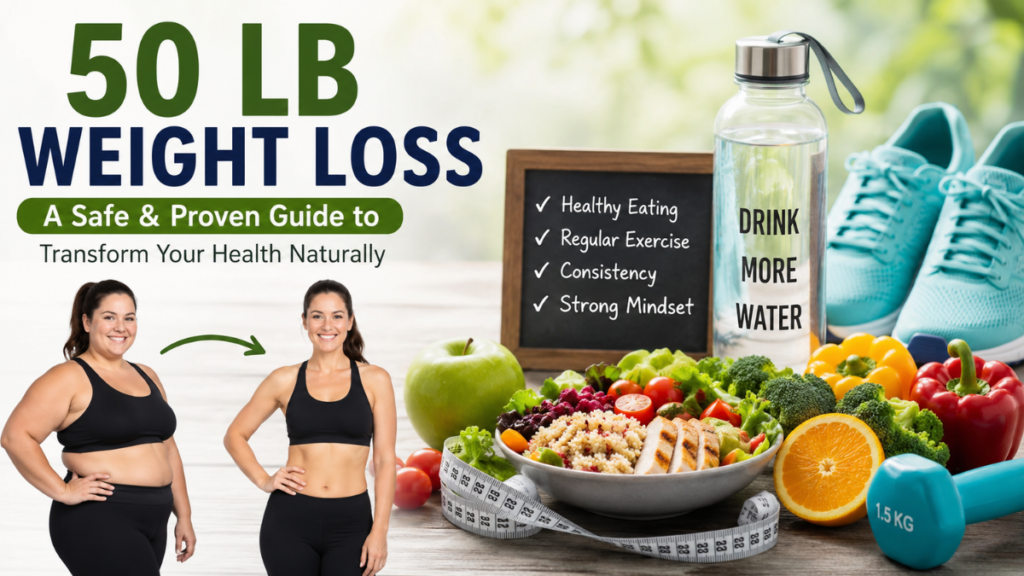
Losing 50 lb weight loss is a life-changing achievement that can improve your physical health, confidence, and overall quality of life. While the journey may seem challenging, reaching your goal is absolutely possible with the right nutrition, exercise routine, healthy habits, and consistency.
Instead of relying on quick fixes or fad diets, embrace sustainable lifestyle changes that support safe, steady weight loss and help you maintain your results for years to come.
In this comprehensive guide, you’ll learn how to create an effective weight loss plan, what to eat, how to exercise, common mistakes to avoid, and how to stay motivated throughout your journey.
Why Is Losing 50 Pounds So Important?
Carrying excess body weight can increase your risk of developing several chronic health conditions, making sustainable weight management an important step toward better overall health. These conditions may include:
- Type 2 diabetes
- High blood pressure
- Heart disease
- Sleep apnea
- Joint pain
- Fatty liver disease
- Reduced mobility
Achieving a 50 lb weight loss can significantly reduce these health risks while improving energy levels, mental health, and daily performance.
Benefits include:
- Better cardiovascular health
- Improved blood sugar control
- Increased confidence
- Better sleep quality
- Reduced joint pressure
- Higher metabolism
- Improved mobility
- Longer life expectancy
Is Losing 50 Pounds Realistic?
Absolutely.
Most health experts recommend losing 1–2 pounds per week, making a healthy timeline approximately:
| Weight to Lose | Estimated Time |
| 50 Pounds | 6–12 Months |
Although some people lose weight faster initially due to water loss, gradual weight reduction is more sustainable and healthier.
Step 1: Set Realistic Goals
Rather than focusing only on the final goal, divide it into smaller milestones.
Example:
- First 5 lbs
- First 10 lbs
- First 20 lbs
- First 30 lbs
- First 40 lbs
- Complete 50 lb weight loss
Celebrating small achievements keeps motivation high.
Step 2: Understand Calorie Deficit
Successful weight loss begins with creating a calorie deficit, where your body burns more calories than it consumes. This encourages your body to use stored fat for energy, leading to gradual and sustainable weight loss.
To lose approximately one pound:
Calorie Deficit = About 3,500 Calories
Healthy daily calorie deficit:
- 500 calories/day = 1 pound/week
- 750 calories/day = 1.5 pounds/week
- 1000 calories/day = 2 pounds/week (only under professional guidance)
Avoid crash dieting because it often leads to muscle loss and weight regain.
Step 3: Eat a Balanced Diet
Nutrition contributes significantly to successful weight loss.
Focus on:
Lean Protein
Protein keeps you full longer.
Examples:
- Chicken breast
- Fish
- Eggs
- Greek yogurt
- Cottage cheese
- Lentils
- Tofu
High-Fiber Foods
Fiber improves digestion and reduces hunger.
Choose:
- Oats
- Brown rice
- Beans
- Apples
- Broccoli
- Spinach
- Sweet potatoes
Healthy Fats
Healthy fats support hormone balance.
Include:
- Avocados
- Olive oil
- Almonds
- Walnuts
- Chia seeds
- Flaxseeds
Hydration
Drink:
- 2–4 liters of water daily
Proper hydration:
- Reduces cravings
- Improves metabolism
- Supports digestion
- Enhances workout performance
Foods to Avoid
Limit:
- Sugary drinks
- Candy
- White bread
- Fast food
- Deep-fried snacks
- Alcohol
- Processed foods
- High-sugar desserts
These foods are calorie-dense but provide little nutritional value.
Step 4: Follow a Structured Workout Plan
Exercise accelerates fat loss while preserving muscle.
Cardio
Aim for:
- 150–300 minutes weekly
Good choices include:
- Walking
- Running
- Cycling
- Swimming
- Jump rope
- Dancing
Strength Training
Strength training is an essential part of any weight loss plan, helping you build and maintain lean muscle, improve overall strength, and support a healthy metabolism for long-term results.
Train:
- 3–4 days weekly
Focus on:
- Squats
- Push-ups
- Deadlifts
- Lunges
- Rows
- Shoulder presses
Daily Activity
Increase daily movement:
- Take the stairs
- Walk after meals
- Park farther away
- Stretch regularly
- Stand instead of sitting for long periods
Every extra step contributes to your calorie burn.
Step 5: Improve Sleep
Poor sleep disrupts hunger hormones.
Aim for:
- 7–9 hours every night
Good sleep helps:
- Reduce cravings
- Improve recovery
- Increase fat burning
- Support hormonal balance
Step 6: Manage Stress
Stress often leads to emotional eating.
Healthy stress management includes:
- Meditation
- Yoga
- Walking
- Reading
- Deep breathing
- Journaling
- Spending time outdoors
Managing stress supports better eating habits and long-term consistency.
Sample One-Day Meal Plan
Breakfast
- Oatmeal
- Boiled eggs
- Green tea
Mid-Morning Snack
- Apple
- Handful of almonds
Lunch
- Grilled chicken
- Brown rice
- Mixed vegetables
Evening Snack
- Greek yogurt
- Berries
Dinner
- Grilled salmon
- Broccoli
- Sweet potato
Before Bed
- Herbal tea
Common Mistakes That Slow Weight Loss
Avoid these common errors:
Skipping Meals
This often increases hunger later in the day.
Drinking Calories
Sugary beverages can add hundreds of unnecessary calories.
Unrealistic Expectations
Healthy weight loss takes time.
Ignoring Strength Training
Muscle helps burn more calories, even while resting.
Poor Portion Control
Even healthy foods can contribute to excess calorie intake if portions are too large.
Inconsistent Routine
Consistency matters more than perfection.
How to Stay Motivated
Try these proven strategies:
- Track your progress weekly.
- Take monthly photos.
- Measure your waist and hips.
- Reward yourself with non-food treats.
- Join a fitness community.
- Exercise with a friend.
- Focus on habits instead of perfection.
Remember, progress is not always linear. Lasting weight loss is the result of small, consistent lifestyle changes that build momentum over time, leading to meaningful and sustainable health improvements.
Can You Lose 50 Pounds Without Going to the Gym?
Yes.
Many people achieve a 50 lb weight loss through:
- Walking
- Home workouts
- Bodyweight exercises
- Resistance bands
- Healthy eating
- Consistent daily activity
The key is maintaining a calorie deficit while staying active.
How Long Does It Take?
Everyone’s journey is different.
Factors include:
- Starting weight
- Age
- Gender
- Metabolism
- Activity level
- Diet quality
- Sleep
- Consistency
For most people, losing 50 pounds safely takes between 6 and 12 months.
Healthy Habits That Make a Big Difference
Develop these habits for long-term success:
- Eat slowly.
- Plan meals ahead of time.
- Read food labels.
- Keep healthy snacks available.
- Exercise consistently.
- Stay hydrated.
- Avoid late-night overeating.
- Limit processed foods.
- Monitor progress regularly.
- Practice patience and persistence.
These habits support lasting results beyond the number on the scale.
Final Thoughts
A 50 lb weight loss is a meaningful goal that can improve your health, energy, and confidence. While it requires commitment, the combination of balanced nutrition, regular physical activity, quality sleep, stress management, and consistency can help you achieve lasting success.
Avoid quick-fix diets and focus on building healthy habits you can maintain for life. Every small step you take today brings you closer to achieving your weight loss goals and building a healthier, more confident future.
Frequently Asked Questions (FAQs)
1. How long does it take to achieve a 50 lb weight loss?
Most people can safely lose 50 pounds in 6 to 12 months by maintaining a calorie deficit, exercising regularly, and following a balanced diet.
2. Is losing 50 pounds healthy?
Yes. Losing weight gradually at 1–2 pounds per week is generally considered safe and sustainable for most adults.
3. What is the best diet for losing 50 pounds?
A balanced eating plan rich in lean protein, vegetables, fruits, whole grains, healthy fats, and fiber while limiting processed foods and sugary drinks is one of the most effective approaches.
4. Can I lose 50 pounds without exercise?
Weight loss is possible through diet alone, but combining healthy eating with regular physical activity helps preserve muscle, improves fitness, and supports long-term weight management.
5. How many calories should I eat?
Calorie needs vary based on age, sex, height, weight, and activity level. Creating a moderate calorie deficit while meeting your nutritional needs is generally recommended. Consulting a healthcare professional or registered dietitian can help determine an appropriate target.
6. How much water should I drink?
Most adults benefit from drinking around 2–4 liters of water daily, though individual needs vary based on activity level, climate, and health conditions.
7. Can walking help me lose 50 pounds?
Yes. Regular brisk walking combined with a healthy eating plan can contribute significantly to weight loss and improved cardiovascular health.
8. What is the biggest mistake people make during weight loss?
Common mistakes include crash dieting, skipping meals, relying on highly processed “diet” foods, neglecting strength training, and expecting rapid results.
Ready to Start Your Weight Loss Journey?
If you’re looking for more expert health guides, practical weight loss tips, nutrition advice, and wellness resources, visit www.health.bhagatsinghdigital.com.
📞 Call Now: +91-8905335392
Our team is here to help you make informed health decisions and stay motivated on your journey toward a healthier lifestyle.